

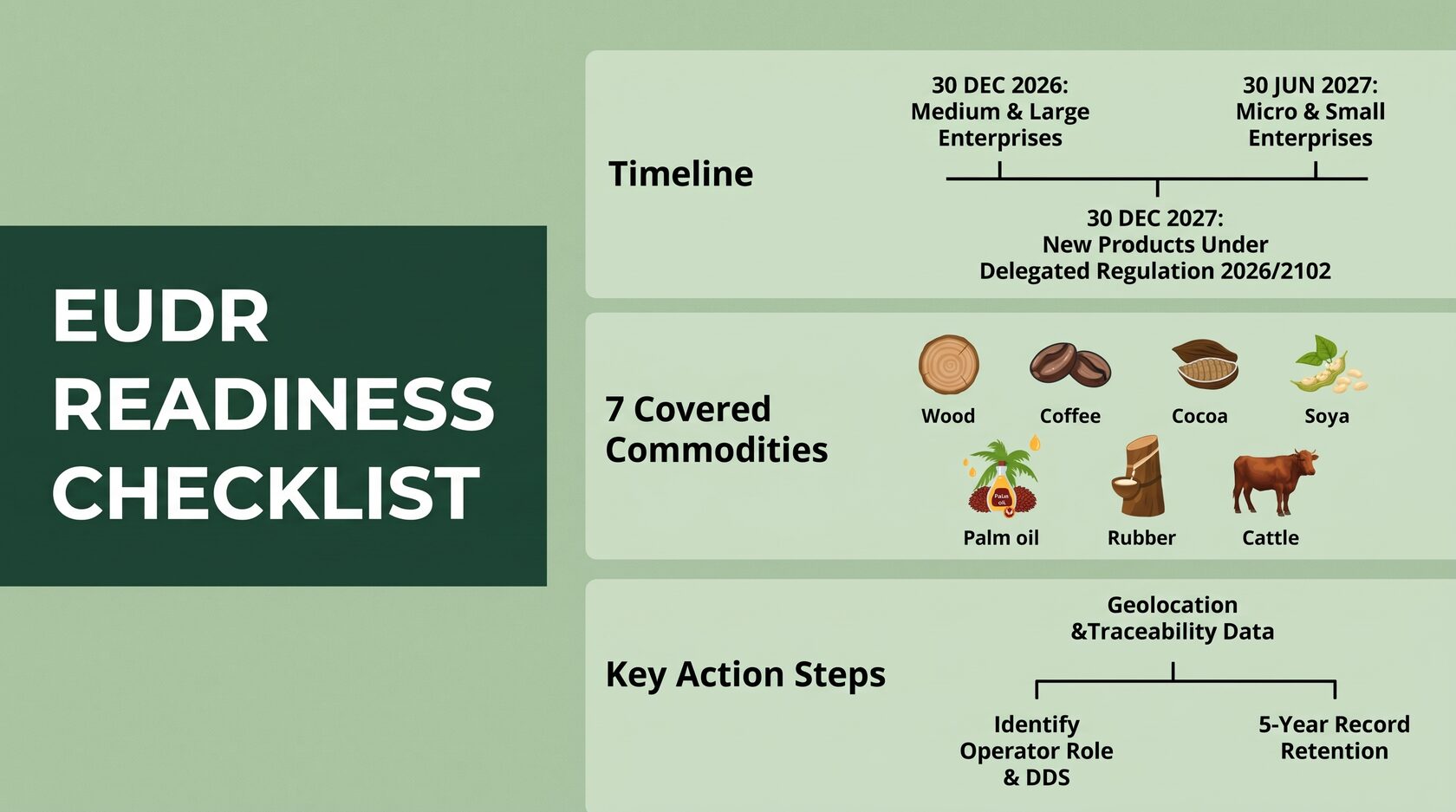
Preparation starts with three questions: which products are covered, what is your role in the supply chain, and can you obtain the required supplier data?
EUDR covers selected products linked to seven commodities: wood, coffee, cocoa, soya, oil palm, rubber and cattle. Check each product against the CN/HS codes and descriptions in Annex I.
For operators, the main application dates are:
• 30 December 2026 for large and medium-sized operators.
• 30 June 2027 for most other micro and small operators.
New products added by Delegated Regulation (EU) 2026/2102 become subject to EUDR from 30 December 2027.
Covered goods must be legally produced and must not come from land deforested after 31 December 2020. Wood must also meet the forest degradation requirements.
What should businesses do now?
✓ Identify who must conduct due diligence and submit a Due Diligence Statement (DDS), or whether a simplified declaration applies. Downstream businesses have different obligations.
✓ Arrange access to origin information, geolocation data where required, and supplier records relevant to your role.
✓ Set up retention of the required due diligence and traceability records for at least five years.
The EUDR Information System is available through TRACES, with a separate environment for training and testing.
Start with your product list and supplier data now.
